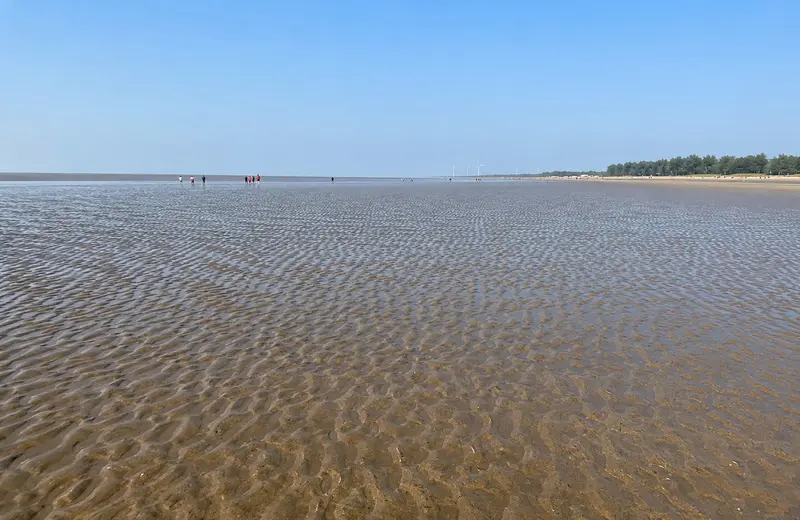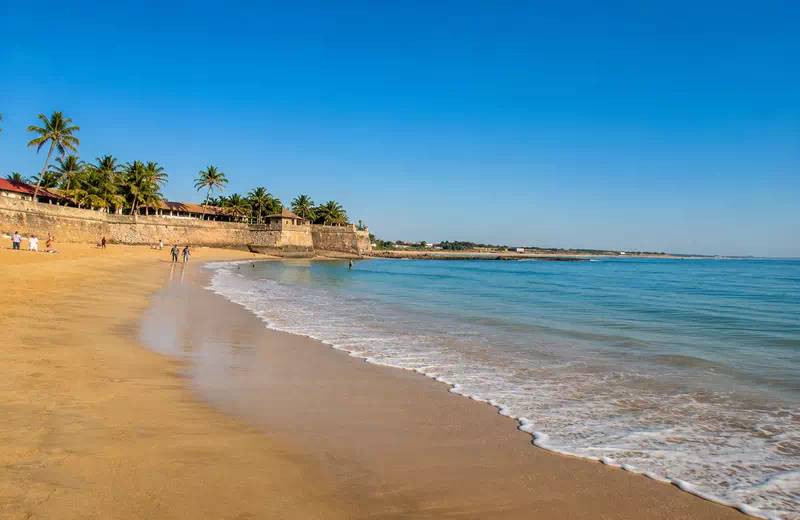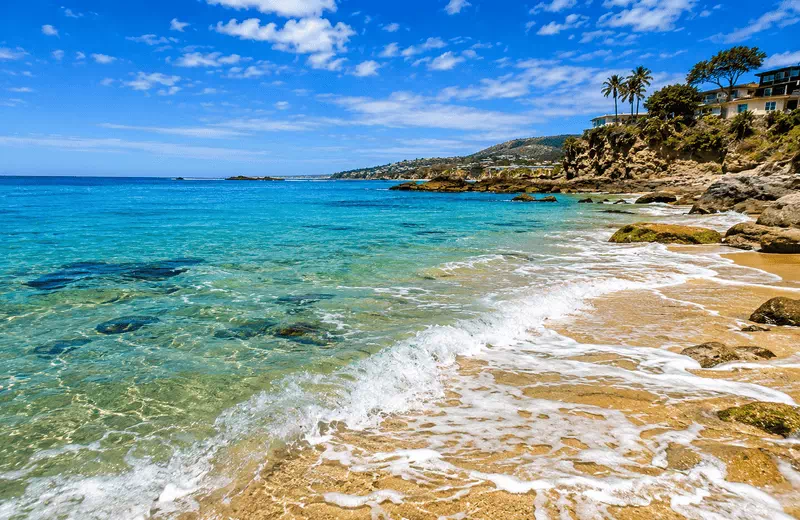
Walk south along the sand from loud, packed Calangute and something shifts. The crowd thins. The music from the shacks gets quieter. The beach widens out, the loungers space apart, and you can suddenly hear the waves again. That is Candolim Beach, sitting at the southern end of North Goa's busiest coastal strip, and it has quietly become the spot for people who want Goa's energy without its chaos.
Candolim is part of the same long ribbon of sand that runs through Calangute and Baga, but it carries itself differently. It starts near the old Portuguese ramparts of Fort Aguada and stretches north for kilometres, one of the longest beaches in Goa. There are still jet skis, beach bars, and a nightclub or two within reach. You just are not fighting a thousand people for a patch of sand to put your towel on.
A practical guide to reaching Candolim, timing your trip right, and filling your days on one of North Goa's most relaxed beaches.
| At a Glance | Details |
|---|---|
| Where | Bardez, North Goa, between Fort Aguada and Calangute |
| Nearest airports | Mopa (GOX) and Dabolim (GOI), roughly 35 km each |
| Nearest railway | Thivim, about 20 km away |
| From Panaji | Around 13 km, 25–30 minutes |
| Best time | Mid-November to February |
| Known for | Long calm beach, water sports, Fort Aguada, laid-back vibe |
| Entry fee | Free |
Why Candolim Is the Calm Choice in Party-Heavy North Goa
North Goa has a reputation, and most of it was earned by Baga and Calangute. Those two are loud, commercial, and brilliant at what they do. Candolim sits right next door and does the opposite. The sand is wider, the pace is slower, and the crowd skews toward families, couples, and travellers who have done the party circuit once and decided they would rather sleep.
It helps that Candolim never fully became a fishing-village-turned-circus. It grew up as a quiet residential stretch and only turned touristy as North Goa boomed through the 1980s and 90s, which is why it still feels a notch more grown-up than its neighbours. You get proper restaurants, comfortable hotels, and water sports operators, all without the relentless hawking you hit further north. If you are still deciding which half of the state suits you, the North Goa vs South Goa split is worth understanding first, because Candolim is the sweet spot where North Goa's convenience meets a more South Goa kind of calm.
If your idea of Goa is a sunbed, a cold Kingfisher, a plate of fish curry rice, and a sunset you do not have to share with a stampede, Candolim is the beach to base yourself on.
Best Time to Visit Candolim
Goa runs on two seasons, and Candolim is no exception.
The window from mid-November to February is when the weather behaves: dry days, warm sun, cool evenings, and a sea that is calm enough for swimming and water sports. This is peak season, so it is also when prices climb and the beach fills up around Christmas and New Year. If you want the good weather without the holiday surcharge, aim for late November or early February.
October and March are the shoulder months. The monsoon has either just cleared or summer is creeping in, hotels are cheaper, and the beach is calmer, though October can still feel humid. From April the heat builds, and by June the southwest monsoon arrives and reshapes the place entirely. The shacks come down, water sports stop, the sea turns rough, and swimming is unsafe. That said, the green, washed-out, dramatically empty version of the coast has its own pull, and there is a real case for visiting Goa during the monsoon if quiet and lush is what you are after.
Most water sports and beach shacks run only in the dry season, roughly October to May. If you travel in the monsoon, come for the scenery and the seafood, not the jet skis.
How to Reach Candolim
Getting to Candolim is straightforward from almost anywhere in India.
Flying is the simplest option. Goa has two airports: the older Dabolim (GOI) to the south, and the newer Manohar International at Mopa (GOX) to the north. Candolim sits roughly 35 km from each, which works out to about a 45-minute to one-hour drive depending on traffic and which airport you land at. Prepaid taxis and app cabs are available at both; fares shift with fuel prices and season, so confirm the rate at the prepaid counter rather than guessing.
By train, the nearest station is Thivim in North Goa, around 20 km out and roughly a 30 to 40 minute cab ride away. Karmali is a similar distance, while Madgaon (Margao) in the south is the bigger railhead but a longer haul. From any of them, a taxi or pre-booked transfer is the practical way in.
If you are coming by road, Candolim is about 13 km from Panaji, the state capital, an easy 25 to 30 minute drive. Kadamba Transport Corporation (KTC) buses run regularly and cheaply from Panaji toward Calangute and Candolim if you are travelling on a tight budget. Once you are settled in, the local move is to rent a scooter, which is by far the best way to reach nearby beaches, shacks, and Fort Aguada on your own schedule. If you have never ridden in Goa before, it is worth reading up on how to explore Goa on a scooter first, since you will need a valid licence and a helmet, and the police do check.
Things to Do on Candolim Beach
The beach itself can fill a whole day, and most of the good stuff happens right on the sand.
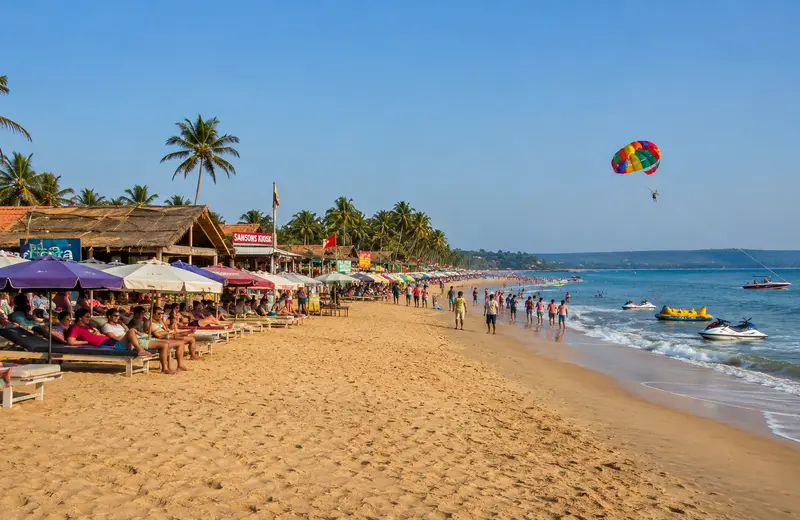
Lounging is the main event, and Candolim does it well. Sunbeds and umbrellas line the shore, usually free if you order food and drinks from the shack behind them. The water is generally calm and good for a swim, though you should still respect the lifeguard flags. Water sports are the other big draw, with operators offering jet skiing, parasailing, banana and bumper boat rides, and more, mostly between about 10 a.m. and 5 p.m. in season. You rarely need to book ahead; you just walk up, pick an activity, and negotiate. Prices vary a lot by season and how well you bargain, so agree on the figure before you climb aboard.
For something calmer, head out on a dolphin-spotting boat trip, which usually launches from nearby Sinquerim or the Nerul river and gives you a decent shot at seeing pods in the Arabian Sea. As the day winds down, the sunset is the thing everyone stops for. Grab a spot at a beachfront shack, order a drink, and watch the sky go orange over the water. It is the single most reliable highlight Candolim offers, and it costs nothing.
Places to See Near Candolim
One of Candolim's biggest advantages is its location. You are within easy reach of a stack of North Goa's best-known sights.
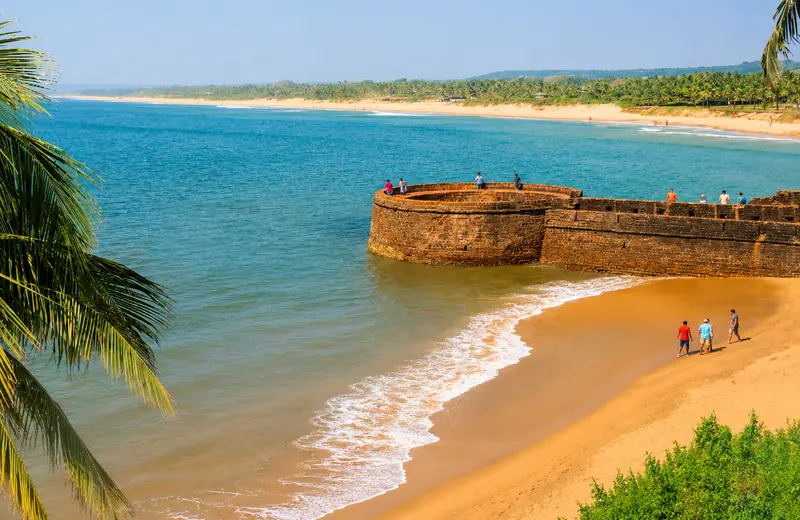
Fort Aguada is the obvious first stop, sitting right at the southern end of the beach above Sinquerim. Built by the Portuguese in the 17th century to guard against Dutch and Maratha attacks, it still has a centuries-old lighthouse and sweeping views over the Arabian Sea. It is free to wander the ramparts, and the photos from up there are some of the best in the area. Just below it, Sinquerim Beach is a quieter cove that doubles as a water sports hub.
Head north and you can walk straight into Calangute, the self-styled "Queen of Beaches," for shopping and bustle, then on to Baga for its famous nightlife, about 20 minutes away by road. Further up the coast, the cliffs and quieter sands of Vagator and the hippie-flavoured stretch of Arambol reward a day trip if you want a change of scene. Closer to home, the 16th-century Church of St. Lawrence in Candolim village is a quiet nod to the area's Portuguese past.
For bigger excursions, Old Goa and its UNESCO-listed churches, including the Basilica of Bom Jesus, sit about 40 minutes away, and the multi-tiered Dudhsagar Falls make a long but rewarding inland trip in season. There are plenty more options if you want to roam; this round-up of day trips from Goa covers the ones most travellers miss.
Candolim After Dark
Candolim's nightlife is real, but it is dialled down compared to the all-night madness of Baga's club strip. You will find beachfront bars with live music, relaxed lounges, and a handful of bigger clubs scattered around the Candolim and Sinquerim area where you can dance if the mood strikes. The vibe leans toward easy drinks at sunset rather than fist-pumping until 4 a.m.
If you do want the full Goa club experience, you are perfectly placed for it, since the bigger party scene is a short cab ride away. For a sense of where the wild nights actually happen, this guide to Goa's nightlife maps out the clubs and beach bars worth the trip. The smart play is to stay in calm Candolim and travel to the noise when you want it.
Where to Eat and What to Try
Goan food is half the reason to come, and Candolim feeds you well.
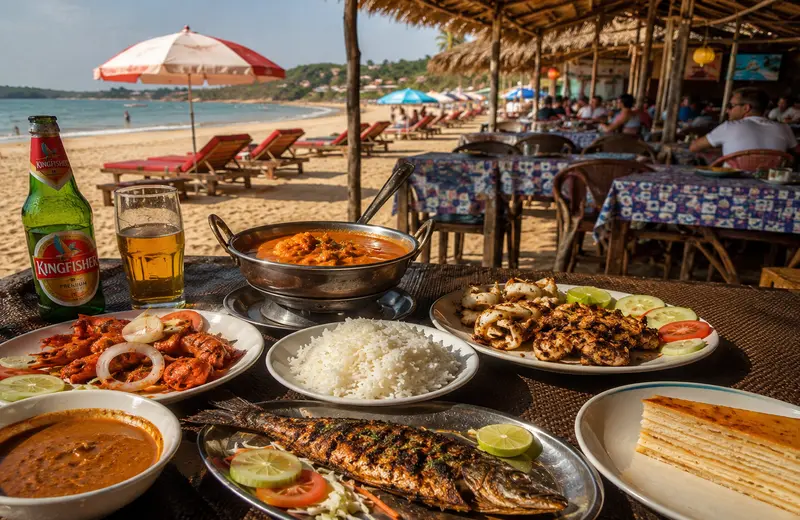
The beach shacks are the heart of it. These temporary sand-floor restaurants reopen each dry season and serve fresh seafood with your toes practically in the sand. Order the catch of the day, a Goan fish curry with rice, grilled prawns, or calamari, and a cold beer or a fresh lime soda to go with it. Beyond the shacks, the Candolim–Calangute road is lined with sit-down restaurants ranging from Goan and seafood specialists to Burmese, Continental, and North Indian kitchens, so you are never short of choice.
Make a point of trying the genuinely local dishes while you are here. Pork vindaloo is tangier and fierier than the curry-house version, sorpotel is a rich, spiced pork classic, prawn balchão brings a sharp pickle-like kick, and bebinca, a layered coconut-and-egg pudding, is the dessert to finish on. Wash some of it down with feni, Goa's potent local spirit made from cashew or coconut. If you are watching your spending, the beach shacks across Goa are where you eat best for the least.
Where to Stay in Candolim
Candolim has one of the widest accommodation ranges in North Goa, which is part of why it suits so many kinds of travellers.
At the top end, names like the Taj Fort Aguada and Vivanta sit along the Sinquerim–Candolim stretch with sea views, pools, and full resort amenities. The mid-range is the deepest band here, packed with comfortable hotels and serviced apartments along the main road, most within a short walk or scooter ride of the beach. Budget travellers and backpackers are well covered too, with guesthouses, homestays, and a few hostels that keep costs low while still putting you close to the sand. Booking ahead matters in peak season, especially around the Christmas-to-New-Year rush when the good places sell out and rates spike.
A Simple Candolim Itinerary
If you have a long weekend, this rhythm covers the essentials without rushing.
| Day | Plan |
|---|---|
| Day 1 | Settle in, claim a sunbed on Candolim Beach, swim and try a water sport, then stay for sunset and a seafood dinner at a beach shack. |
| Day 2 | Morning at Fort Aguada and Sinquerim, afternoon scooter ride up to Calangute and Baga for shopping, evening drinks at a Candolim lounge. |
| Day 3 | A dolphin boat trip or a day trip to Old Goa's churches, then a relaxed final evening back on the beach. |
Stretch it to five days and you can add Vagator, a Dudhsagar Falls excursion, and a slow day doing nothing but the beach and the shacks.
Budget: What a Candolim Trip Costs
Candolim flexes from backpacker-cheap to genuinely plush. These are rough per-person ranges in Indian rupees to help you plan; prices move with season and demand, so treat them as a guide, not a quote.
| Expense | Budget | Mid-range | Higher-end |
|---|---|---|---|
| Stay (per night) | ₹800–₹1,800 | ₹2,500–₹6,000 | ₹10,000+ |
| Food (per person, per day) | ₹400–₹800 | ₹1,000–₹2,000 | ₹3,000+ |
| Scooter rental (per day) | ₹300–₹500 | — | — |
| Water sport (per activity) | ₹400–₹1,500 | — | — |
| Airport taxi (one way) | — | ₹1,200–₹1,600 | private transfer more |
To keep costs down, travel in the shoulder months, eat at shacks and local restaurants rather than hotel dining, rent a scooter instead of relying on taxis, and skip the pricey packaged tours for things you can do yourself. The beach itself, the sunsets, and Fort Aguada are all free.
Travel Tips Before You Go
A little local knowledge goes a long way in Candolim. Always agree on a price before any water sport or taxi ride, because meters are often ignored and rates are negotiable; a friendly but firm haggle is normal and expected. Carry some cash, since smaller shacks and shops may not take cards, though ATMs are easy to find along the main road. If you rent a scooter, keep your licence and helmet on you and go slow, as Goan traffic can be unpredictable and police checks are common.
Settle the fare before you start, not after. Whether it is a parasailing ride, a dolphin boat, or a taxi to Baga, confirm the number first. It saves the most common argument tourists have in Goa.
On safety, respect the lifeguard flags and avoid swimming during or just after the monsoon when currents are strong; the calm-looking sea here can pull harder than it appears. Drink bottled or filtered water, use strong sunscreen given the tropical sun, and keep an eye on your belongings on a busy beach. None of this is meant to scare you off. Candolim is one of the more relaxed and traveller-friendly beaches in Goa, and a small amount of common sense is all it takes to keep your trip smooth.
Best Spots for Photos
Sunset from a Candolim shack or the open sand is the easy winner, with the sky turning gold over the Arabian Sea. Climb up to Fort Aguada in the late afternoon for wide coastal views and that weathered Portuguese stonework. The dolphin boats give you a different angle on the shoreline, and the long, emptier northern end of the beach is the place to catch the sand stretching into the distance without a crowd in the frame.
Final Word
Candolim wins by being the calm in the middle of North Goa's storm. You get the long beach, the water sports, the shacks, and the sunsets, plus Fort Aguada on your doorstep and Calangute's buzz a short walk away, all without surrendering your peace. Come between mid-November and February for the best weather, base yourself here, and travel out to the noise only when you feel like it. The next step is simple: pick your dates around the dry season, book a stay near the beach early if you are coming over the holidays, and plan your first evening around a shack-side sunset.