







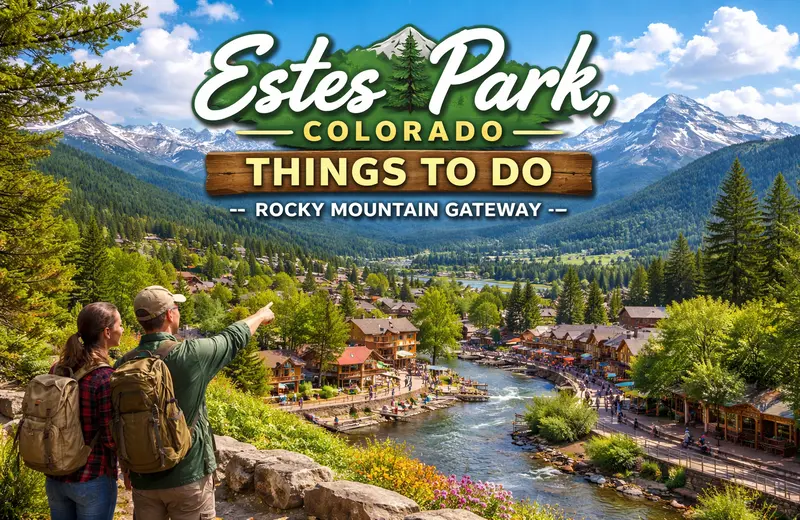
There are towns that sit near something beautiful, and then there is Estes Park — a town that basically lives inside the beautiful thing. Perched at 7,522 feet at the eastern entrance of Rocky Mountain National Park, Estes Park is the kind of place where you can watch elk graze on the town green in the morning, hike to an alpine lake by noon, and eat a proper sit-down dinner with mountain views by evening. It is small enough to feel personal and wild enough to feel like a real adventure. If you have been looking for the perfect Colorado mountain town experience, you just found it.
Why Estes Park Is More Than Just a Park Entrance
Most people think of Estes Park purely as the place you sleep before entering Rocky Mountain National Park the next morning. That is a mistake. The town itself has genuine character — a lively downtown strip, an outstanding wildlife watching scene, a historic hotel with a ghost story attached, and an outdoor activity calendar that stays packed from May through October. Yes, the park is the main event, but Estes Park Colorado things to do extend well beyond the park gates and the town rewards every extra hour you give it.
Getting to Estes Park
Estes Park sits about 90 minutes northwest of Denver via US-36 through Boulder and then CO-36 into the mountains. The drive through Boulder Canyon and up into the foothills is scenic the entire way and sets the mood perfectly before you arrive. From Fort Collins the drive is about an hour via US-34 through the Big Thompson Canyon, which is arguably the more dramatic approach — the canyon road hugs the river closely and the rock walls tower above you the whole way. There is no direct public transit from Denver to Estes Park, so a car is necessary. Once in town, most of downtown is walkable and the park shuttle system inside Rocky Mountain National Park reduces the need to drive once you are there.
Rocky Mountain National Park — The Main Event
No Estes Park Colorado things to do complete Rocky Mountain gateway guide would be honest without putting the park front and center. Rocky Mountain National Park is one of the most visited national parks in the United States, and for very good reason. The park contains over 350 miles of hiking trails, more than 60 mountain peaks above 12,000 feet, and ecosystems that range from dense pine forest at the lower elevations to stark, treeless tundra above the tree line.
Bear Lake is the most popular starting point and deservedly so — the lake itself is beautiful and the surrounding trail network connects to some of the best hikes in the park including Nymph Lake, Dream Lake, and Emerald Lake, each one more stunning than the last. The full loop to Emerald Lake is only about three miles round trip but feels like it covers three completely different worlds. Trail Ridge Road is the highest continuous paved road in the United States, cresting above 12,000 feet and offering views that are genuinely staggering — you drive through the clouds, above the tree line, and across an alpine tundra landscape that feels more like Alaska than Colorado. Plan at least two hours just for the road itself.
Wildlife in the park is exceptional. Elk are practically everywhere, especially during the fall rut in September and October when the bulls bugle across the valleys in one of nature's most dramatic sounds. Moose frequent the Kawuneeche Valley on the west side of the park, and with patience you can also spot bighorn sheep on the rocky upper slopes. Early morning is always the best time for wildlife — the animals are active, the light is golden, and the crowds have not yet arrived.
Things to Do in Estes Park Town
Downtown Estes Park sits along the Fall River and the main strip is genuinely fun to explore on foot. The Estes Park Aerial Tramway lifts you 1,400 feet above town to the summit of Prospect Mountain in about four minutes, rewarding you with panoramic views that stretch from the Continental Divide to the plains of eastern Colorado. It is a perfect activity for families or anyone who wants big views without a long hike.
Lake Estes just east of downtown offers kayaking, paddleboarding, fishing, and a flat paved trail around the perimeter that is popular with cyclists and walkers alike. The reservoir sits against a dramatic mountain backdrop and the evening light here is consistently spectacular. For something more historical, the Stanley Hotel is one of the most famous buildings in Colorado — a grand 1909 resort that inspired Stephen King to write The Shining after a stay here. Tours of the hotel run regularly and even if ghost stories are not your thing, the building and its mountain setting are worth seeing.
The Estes Park Farmers Market runs through summer and early fall and showcases local produce, artisan foods, and handmade crafts in a relaxed outdoor setting. The Estes Park Museum gives a solid grounding in the history of the town and the region for those who like context with their travel. And simply walking along the Riverwalk through downtown — watching the river rush past, the elk graze on the nearby meadows, and the mountains frame everything — costs nothing and never gets old.
Where to Eat in Estes Park
The food scene in Estes Park has improved considerably in recent years. Cascades Restaurant inside the Stanley Hotel offers a dining experience that matches the grandeur of the building — the menu is Colorado-focused and the setting is unmatched in town. Smokin' Dave's BBQ is the local favorite for casual eating, with slow-smoked meats and generous portions that hit the spot after a long day on the trails. Kind Coffee on Elkhorn Avenue is the go-to morning stop — excellent espresso, a warm atmosphere, and a porch that looks straight up at the mountains. Grubsteak Restaurant has been feeding hungry hikers since 1967 and the steaks and mountain trout remain as reliable as ever.
Where to Stay
The Stanley Hotel is the obvious splurge choice and the experience of staying in such a historically rich building is genuinely memorable. For something more budget-friendly, the town has a wide range of motels, lodges, and vacation rentals that put you close to both downtown and the park entrance. Romantic Riversong Inn is a beautiful bed and breakfast set on 27 private acres just outside town, perfect for couples looking for something quieter and more intimate. Camping inside Rocky Mountain National Park itself is an option for those who want to wake up already inside the wilderness — reservations are required and fill up fast, so book months in advance.
Best Time to Visit
Summer is peak season and the park is at its most accessible from June through August, with all trails open and Trail Ridge Road fully passable. Fall is many locals' favorite time — the crowds thin slightly, the aspens turn gold, and the elk rut in September and October adds a wildlife dimension that summer simply cannot match. Winter closes Trail Ridge Road and some trails but opens up snowshoeing and a quieter, more intimate version of the town. Spring is unpredictable weather-wise but the waterfalls run high from snowmelt and the sense of the mountains waking up is its own kind of magic.
Before You Go
Rocky Mountain National Park now requires a timed entry permit during peak summer months — check the park's official website well before your trip and book your permit as early as possible because they sell out fast. The altitude in Estes Park and especially inside the park is serious, so follow the same rules as any high-altitude destination — hydrate constantly, take the first day easy, and respect how quickly the weather can change above the tree line. Afternoon thunderstorms are common throughout summer and can be dangerous on exposed ridges, so start hikes early and plan to be below tree line by early afternoon. Bring layers no matter what month you visit — the temperature drops quickly as elevation increases and what starts as a warm morning can turn cold fast above 11,000 feet.