


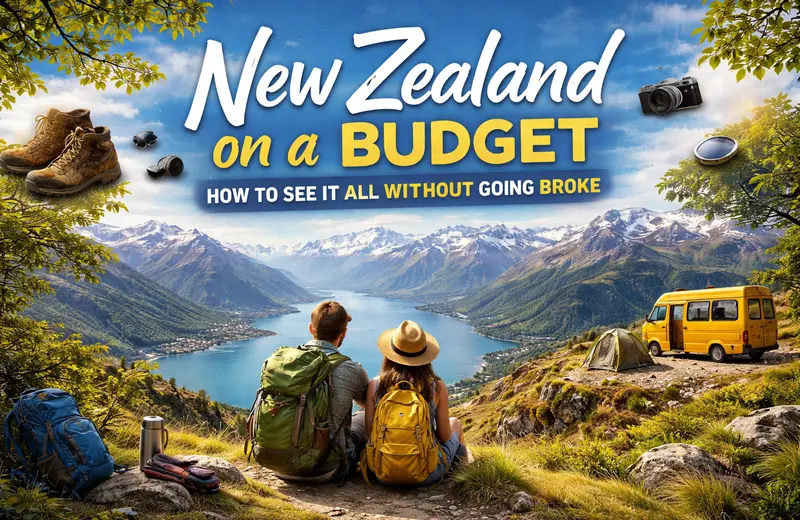
Let's address the elephant in the room right away — yes, New Zealand has a reputation for being expensive. And yes, that reputation has some truth to it. But here's what most travel blogs won't tell you: New Zealand is not expensive in the way people fear it is. It's not a destination that punishes budget travelers. It's a destination that rewards smart ones. The mountains, the fjords, the ancient forests, the black sand beaches — none of them charge an entry fee. The real cost of New Zealand isn't the scenery. It's the choices you make getting there and moving around once you arrive. Make the right choices, and this country — this jaw-droppingly beautiful, endlessly surprising country — becomes far more accessible than you'd expect. Here's everything you need to know to do New Zealand properly without doing your savings account dirty.
What Does New Zealand Actually Cost in 2026?
Before you pack your bags, here's the real updated picture for 2026 — so you can plan with confidence from day one.
A backpacker traveling on a tight budget can expect to spend around NZ$131 per day — covering hostel dorms, self-catered meals, bus travel, and two or three major activities. Step up slightly and a more comfortable but still frugal traveler spending around NZ$280 per day gets a private hostel or hotel room, more restaurant meals, and solid adventure activities with a little breathing room.
There's one important 2026 update every traveler needs to know before booking: the mandatory International Visitor Levy (IVL) fee has increased from NZ$35 to NZ$100 — nearly three times the previous amount — so factor that into your pre-trip costs from the start.
The bottom line? Budget-conscious travelers who stay in hostels, self-cater most meals, and lean on free activities can realistically keep daily costs between NZ$57 and NZ$90 per person. That's a very liveable number for one of the world's most spectacular destinations.
The Single Biggest Budget Decision: Campervan vs Car vs Bus
Nothing shapes your New Zealand budget more dramatically than how you choose to get around. This one decision can save — or cost — you thousands.
The Campervan: This is the classic budget traveler's weapon in New Zealand, and for good reason. A campervan combines your transport and accommodation into a single cost. If you have a self-contained vehicle, Department of Conservation (DOC) campsites cost around NZ$13–20 per night, and hundreds of designated freedom camping spots across the country are completely free. Add a portable gas stove and a supermarket run, and your daily food and shelter costs drop dramatically. The campervan is not glamorous. But it is devastatingly effective.
The Budget Car: Renting or buying a secondhand car gives you the freedom of independent travel with more flexibility than a campervan — you can stay in hostels, use shared kitchens, and meet other travelers, while still moving at your own pace. For longer trips of four weeks or more, buying a secondhand car and selling it before you leave is a genuinely smart strategy popular with working holiday visitors.
The Bus Pass: If you don't want to drive, an InterCity FlexiPass gives you a set number of travel hours usable across the country. Buses booked well in advance cost between NZ$25–45 per ride, though last-minute bookings can double that price. Hop-on hop-off passes are perfect for solo travelers who want flexibility without the stress of driving on the left side of the road.
Accommodation: Where to Sleep Without Overspending
New Zealand's accommodation scene is genuinely built for budget travelers — if you know where to look.
Hostels in major cities and tourist towns range from affordable dorm beds to private rooms. Many hostels have full kitchens, laundry facilities, and social spaces that make longer stays genuinely comfortable. Cities like Christchurch, Wellington, and Auckland have solid hostel options clustered near transport hubs, while Queenstown and Wanaka have excellent options right in the heart of the action.
Holiday parks — a uniquely New Zealand institution — offer a brilliant middle ground. For a modest nightly fee, you get a powered site or budget cabin with access to full kitchen and bathroom facilities. They're clean, friendly, and scattered across both islands, including in locations that no hotel chain would ever reach.
And then there's freedom camping — the real secret weapon. Hundreds of designated free campsites exist across New Zealand, managed by local councils and the Department of Conservation. With the right self-contained vehicle and a downloaded app like Campermate or Rankers Camping NZ, you can plan an entire trip sleeping for free in some of the most breathtaking locations on Earth. Waking up next to a glacier, a turquoise lake, or a deserted beach — for free — is one of the most uniquely New Zealand experiences you can have.
Food & Eating: How to Eat Well Without Eating Out Every Night
Eating out in New Zealand is the fastest way to burn through your budget. A main course at a mid-range restaurant typically costs between NZ$25–35 per person before drinks — which adds up brutally across a two or three week trip.
The smart move is supermarket-first, restaurant-second. Simple self-catering staples — bread, pasta, rice, eggs, peanut butter, oatmeal — are inexpensive, don't spoil quickly, and can cover the majority of your daily meals without sacrificing energy or enjoyment. Pak'nSave is the cheapest major supermarket chain in New Zealand and should be your first stop in every new town. New World and Countdown are widely available alternatives.
Save your restaurant meals for meaningful moments — a lakeside lunch in Wanaka, fresh seafood in Kaikoura, a Maori hangi feast in Rotorua. When you eat out with intention rather than habit, the cost feels completely worth it.
One more honest tip: alcohol in New Zealand is expensive, heavily taxed, and a single relaxed evening out can quietly drain hundreds of dollars before you realize it. If you're serious about your budget, this is the single easiest category to trim without affecting your experience at all.
Activities: The Big Spends and the Big Freebies
Activities are where most New Zealand budgets go sideways — and also where the smartest savings are hiding.
First, the good news: New Zealand's trails, lakes, beaches, and national parks are free. The country's greatest natural attractions — the Tongariro Alpine Crossing, Abel Tasman coastal tracks, Milford Sound viewpoints, Coromandel beaches, and Marlborough wine country roads — cost nothing beyond the effort to get there. You could spend three weeks doing nothing but hiking, swimming, and stargazing and come home with memories that cost almost nothing.
For paid activities, timing matters more than most people realize. Platforms like Bookme regularly offer discounted rates on popular experiences — deals are usually available for off-season dates and sell fast, so checking during shoulder season can unlock significant savings on experiences that would otherwise be full price.
One insider move that smart budget travelers swear by: campervan relocations. These are deals where rental companies pay you to drive their vehicles between cities — sometimes completely free, sometimes at very low daily cost. The catch is that dates and routes are fixed. But for the flexible traveler, it's an extraordinary way to cover large distances at near-zero transport cost.
A good strategy for activities: set aside a dedicated "bucket list fund" of around NZ$500–800 per person specifically for the one or two experiences that matter most to you — a bungee jump in Queenstown, a scenic flight over Aoraki Mount Cook, a whale watch in Kaikoura. Spend that money joyfully and without guilt. Then let the free natural beauty of the country take care of everything else.
Timing Your Trip: When to Go for Maximum Value
Peak season in New Zealand runs December through February — the most expensive period for flights and accommodation. If you can be flexible, the shoulder seasons offer dramatically better value without meaningfully compromising your experience.
March through May and September through November are the sweet spots. Weather remains pleasant across most of the country, accommodation costs drop noticeably, trails are quieter, and the overall pace of travel feels more relaxed and rewarding. Spring in particular — September through November — is arguably New Zealand at its most beautiful. Wildflowers blooming, mountains still carrying winter snow, viewpoints without crowds. It's the quiet season that doesn't feel quiet at all.
The winter months of June through August are the cheapest time to travel overall, with one important exception: ski resort towns like Queenstown and Wanaka spike in price during ski season. Winter on the North Island, however, is mild, green, and genuinely underrated — the Bay of Islands, Coromandel, and Hawke's Bay are all lovely in winter and far less crowded than summer.
Booking flights at least six to eight weeks in advance consistently delivers better fares. If you have complete flexibility, May is historically one of the cheapest months to fly into New Zealand from most major departure points.
The Smart Budget Traveler's New Zealand Checklist
Run through these before you book anything:
- Book flights early — six to eight weeks minimum, three to four months ideally for peak season travel
- Get a campervan or buy a secondhand car for trips longer than two weeks — the combined saving on transport and accommodation is significant
- Download Campermate before you arrive — it maps every free and paid campsite across the country
- Shop at Pak'nSave — New Zealand's most budget-friendly supermarket chain
- Prioritize free hikes and beaches over paid tours wherever possible
- Check Bookme for discounted activity deals, especially during shoulder season
- Budget NZ$100 per person for the International Visitor Levy — a mandatory pre-trip cost in 2026
- Travel slower — the less you move, the less you spend on transport, and the more deeply you experience each place
Final Thoughts
New Zealand doesn't have to be the trip you save a decade to afford. It has to be the trip you plan properly. The country's greatest gifts — its landscapes, its trails, its night skies, its people — are largely free. What costs money is convenience, speed, and not doing your homework. Travel slower. Cook more meals than you eat out. Sleep under the stars when you can. Spend your money on the one or two experiences that matter most to you, and let the land itself take care of the rest. New Zealand has a way of giving back generously to the traveler who arrives with curiosity instead of just a credit card. And that, more than any budget tip, is the real secret to doing this country right.