






Ask anyone about Pigeon Forge and the first word out of their mouth is Dollywood. Always. And look — Dolly Parton's theme park is genuinely wonderful, no argument there. But if Dollywood is the only reason you're considering a trip, you're leaving a lot of Tennessee on the table. This Pigeon Forge, Tennessee travel guide exists specifically for the traveler who wants the full picture. Because this town — sitting right at the edge of the Great Smoky Mountains — has a personality that goes well beyond one very famous park.
Getting to Pigeon Forge
Pigeon Forge sits in Sevier County, eastern Tennessee, about 35 miles southeast of Knoxville. McGhee Tyson Airport in Knoxville (TYS) is your closest major airport, roughly 45 minutes away by car. From Nashville it's about 3.5 hours on I-40 East, and from Atlanta around 2.5 hours heading north. You'll want a car for everything here — the Pigeon Forge Fun Time Trolley runs along the Parkway for just 50 cents a ride and covers the main strip well, but the surrounding areas and mountain access points need your own vehicle.
The Parkway — More Than Just Traffic and Tourists
What the Strip Actually Offers
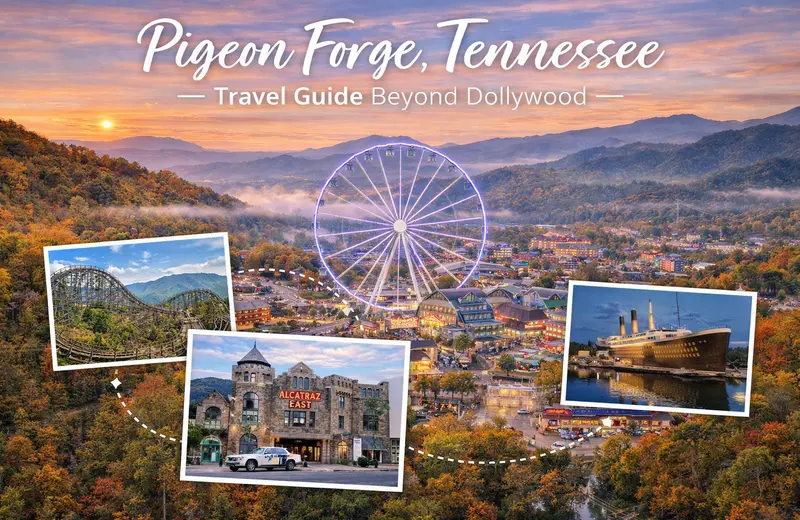
The Pigeon Forge Parkway gets a bad reputation for being overcrowded and kitschy, and sure, it has its moments. But slow down and look past the go-kart tracks and mini-golf courses and you'll find some genuinely worthwhile stops. The Island in Pigeon Forge is a well-designed entertainment complex built around a 200-foot observation wheel, with local shops, live entertainment, and a fountain show that runs throughout the evening. It's free to walk around and the energy there — especially on warm nights — is hard not to enjoy.
The Titanic Museum
The Titanic Museum Attraction is one of those places that sounds gimmicky until you're actually inside it. Built in the shape of the ship itself, it houses over 400 genuine artifacts from the Titanic and tells the story through personal accounts and immersive rooms. It runs about $30 per adult but most visitors say it's one of the most memorable stops in town. History travelers especially tend to love it.
Outdoor Adventures Around Pigeon Forge
Into the Smokies
The real outdoor playground here is Great Smoky Mountains National Park, which begins practically at Pigeon Forge's doorstep. Cades Cove — a wide open valley loop inside the park — is one of the best places in the eastern US to spot wildlife at dawn or dusk. White-tailed deer, black bears, wild turkeys, and occasionally elk all show up regularly. The 11-mile loop road through the cove is paved and manageable even in a regular car.
Ziplining and Mountain Coasters
For something with a bit more adrenaline, Pigeon Forge has built a solid adventure tourism scene. CLIMB Works and Anakeesta (just up the road in Gatlinburg) both offer zipline experiences above the treeline with mountain views that make the whole thing feel worth every penny. The mountain coaster at Rowdy Bear Mountain is a 4,000-foot steel track ride through the forest — it's open year-round and genuinely fun for adults, not just kids.
History and Culture Worth Your Time
Dollywood's Neighbor — The Museum Scene
The Smoky Mountain Opry and Hatfield & McCoy Dinner Show are both big theatrical productions that Pigeon Forge does surprisingly well — dinner theater here is an actual local tradition, not an afterthought. If live performance isn't your thing, the Old Mill area near Pigeon Forge is a 200-year-old grist mill complex that still produces cornmeal and grits using the original stone-ground process. You can buy fresh-milled grains, watch the water wheel turn, and eat at the Old Mill Restaurant, which serves Southern staples done properly.
Where to Eat in Pigeon Forge
Local Plates Worth Finding
Pigeon Forge eats well if you know where to look. The Old Mill Restaurant mentioned above is a genuine must for breakfast or lunch — the corn chowder and fried chicken are exactly what you want after a morning in the mountains. Harpoon Harry's Crab House is the go-to for seafood, with a casual vibe and portions that tend to outlast everyone's appetite. Local Goat is a farm-to-table spot on the Parkway that does creative Southern-influenced dishes and attracts a slightly different crowd than the surrounding tourist restaurants — in the best way.
Best Time to Visit
Fall is the most popular season for a reason — October foliage in the Smokies is extraordinary, and Pigeon Forge leans into it with harvest festivals and seasonal events along the Parkway. Spring is quieter, more affordable, and the wildflower blooms in the national park during April and May are among the best in the country. Summer brings full energy and longer days but also the heaviest crowds and hottest temperatures on the Parkway. Winter sees fewer tourists, occasional snow in the mountains, and Christmas decorations that turn the entire strip into something genuinely festive.
Before You Go
Cabin rentals in the hills surrounding Pigeon Forge often offer better value and more privacy than Parkway hotels — look at areas like Wears Valley or Walden's Creek for quieter options with mountain views. Book fall weekends at least two to three months in advance. The Pigeon Forge Fun Time Trolley really does save parking headaches on the Parkway, so use it when you're staying close to the strip. And if you're visiting with kids, build in more time than you think you need — this town has a way of filling days faster than any plan accounts for.
This Pigeon Forge, Tennessee travel guide was never going to be just about one park. The town around it — the mountains behind it, the food inside it, the history threading through it — adds up to something genuinely worth a proper trip. Everything worth doing beyond Dollywood turns out to be quite a lot. And that's exactly the point.