

Albania’s Spiritual Harmony and Sacred Heritage
Albania may be small in size, but its religious and spiritual heritage is remarkably rich and diverse. Unlike many European destinations known for a single dominant faith, Albania stands out for its peaceful coexistence of religions, a harmony deeply rooted in the country’s history and culture. Christianity, Islam, and Bektashi Sufism have all shaped Albania’s spiritual landscape, leaving behind sacred sites that are not only places of worship but also architectural, historical, and cultural treasures.
For travelers seeking meaningful experiences beyond beaches and mountains, religious and spiritual sites in Albania offer profound insight into the soul of the country. From ancient Orthodox monasteries perched on hillsides to grand Ottoman-era mosques and mystical Sufi tekkes, Albania invites visitors to explore faith through history, art, and tradition.
This guide takes you through the most important religious and spiritual places you can visit in Albania, explaining their significance, what to expect, and how to include them in your travel itinerary. Whether you are a pilgrim, a history lover, or a culturally curious traveler, Albania’s sacred sites offer quiet reflection and unforgettable discovery.
Understanding Albania’s Religious Landscape
Before exploring individual sites, it helps to understand Albania’s unique religious identity.
Albania officially recognizes four main religious communities:
-
Sunni Islam
-
Bektashi Islam (a Sufi order)
-
Eastern Orthodox Christianity
-
Roman Catholicism
Centuries of Ottoman rule, followed by periods of Byzantine and Roman influence, shaped this diversity. During the communist era (1945–1990), Albania became the world’s first officially atheist state, and many religious institutions were closed or destroyed. Since the 1990s, however, religious freedom has been restored, and many sacred sites have been rebuilt or preserved.
Today, Albania is often praised as a model of interfaith tolerance, where mosques, churches, and tekkes stand side by side.
Important Islamic Religious Sites in Albania
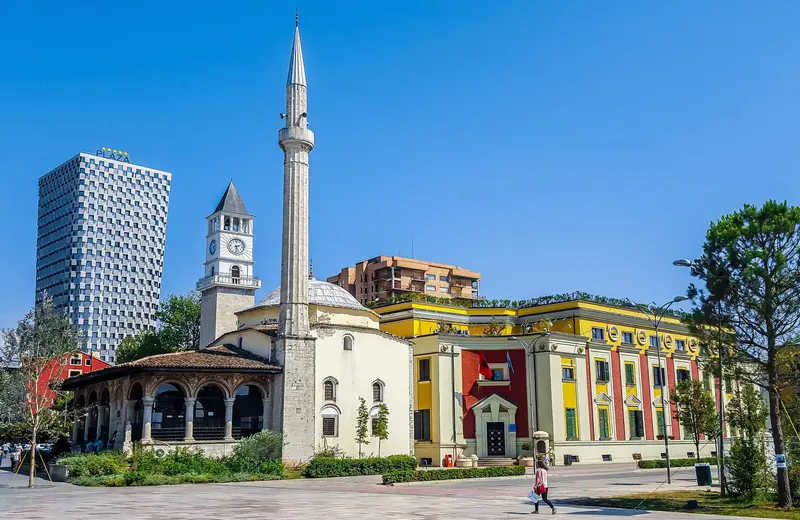
Et’hem Bey Mosque – Tirana
Located in Skanderbeg Square, the Et’hem Bey Mosque is one of Albania’s most iconic religious landmarks. Built in the late 18th and early 19th centuries, it survived the communist era and became a symbol of religious revival when it reopened in 1991.
Why visit:
-
Beautiful frescoes depicting nature, rare in Islamic art
-
Central location in Tirana
-
Historical significance as a symbol of religious freedom
Visitors are welcome outside prayer times, and modest dress is required.
Great Mosque of Tirana (Namazgah Mosque)
The Great Mosque of Tirana, one of the largest in the Balkans, represents modern Islamic architecture blended with tradition. It reflects Albania’s contemporary religious revival and serves as a major center for worship and education.
Highlights:
-
Grand interior with intricate calligraphy
-
Educational and cultural facilities
-
Architectural contrast to older Ottoman mosques
Muradie Mosque – Vlora
Built in the 16th century by the famous Ottoman architect Mimar Sinan, the Muradie Mosque is a masterpiece of classical Ottoman design.
Why it’s special:
-
One of the oldest mosques in Albania
-
Elegant simplicity and historical authenticity
-
Central location in the coastal city of Vlora
Bektashi Spiritual Sites: Albania’s Mystical Heart
World Headquarters of the Bektashi Order – Tirana
Albania is the global center of Bektashi Islam, a mystical Sufi order emphasizing tolerance, spirituality, and inner reflection. The World Headquarters in Tirana is a peaceful and welcoming complex.
What makes it unique:
-
Albania is the only country where Bektashi leadership is based
-
Spiritual teachings open to visitors
-
Calm, contemplative atmosphere
This site is essential for understanding Albania’s spiritual identity.
Mount Tomorr and Abbas Ali Shrine
Mount Tomorr is Albania’s most sacred mountain and a major pilgrimage site, especially for Bektashi followers. Each year, thousands of pilgrims visit the Abbas Ali Shrine located near the summit.
Why it matters:
-
Considered a holy mountain for centuries
-
Combines nature, spirituality, and folklore
-
Important annual pilgrimage in August
Even outside pilgrimage season, Mount Tomorr offers a deeply spiritual experience.
Orthodox Christian Sites in Albania
Orthodox Autocephalous Cathedral of the Resurrection – Tirana
This modern cathedral is the largest Orthodox church in Albania and a symbol of the rebirth of Christianity after communism.
Highlights:
-
Striking contemporary architecture
-
Beautiful mosaics and icons
-
Cultural and spiritual center
The cathedral’s bell tower offers panoramic views of Tirana.
Ardenica Monastery – Near Fier
Founded in the 13th century, Ardenica Monastery is one of Albania’s best-preserved Orthodox monasteries. It famously hosted the wedding of national hero Skanderbeg.
Why visit:
-
Peaceful hilltop setting
-
Stunning frescoes and iconostasis
-
Deep historical significance
This is an excellent stop for travelers exploring central Albania.
Monastery of Saint Naum – Lake Ohrid
Located near the border with North Macedonia, the Monastery of Saint Naum sits on the shores of Lake Ohrid, one of Europe’s oldest lakes.
What makes it special:
-
Spiritual serenity combined with natural beauty
-
Crystal-clear springs and lake views
-
Important Orthodox pilgrimage site
It’s a perfect blend of spiritual reflection and scenic travel.
Catholic Religious Sites in Albania
Shkodër Cathedral (St. Stephen’s Cathedral)
Shkodër is the heart of Albanian Catholicism, and St. Stephen’s Cathedral stands as its most important symbol.
Key features:
-
One of the largest Catholic churches in the Balkans
-
Rich history of religious resistance
-
Simple yet powerful interior
The cathedral represents resilience through centuries of religious suppression.
Church of Saint Anthony – Laç
The Church of Saint Anthony in Laç is Albania’s most important Catholic pilgrimage site. Every year, thousands of believers visit, especially on Tuesdays.
Why it’s significant:
-
Strong tradition of healing and prayer
-
Pilgrimage atmosphere year-round
-
Located in a peaceful mountain setting
Visitors of all faiths are welcome.
Ancient and Multi-Faith Spiritual Sites
Berat: A City of a Thousand Faiths
The UNESCO-listed city of Berat is one of the best places to experience Albania’s religious coexistence. Mosques, Orthodox churches, and Christian relics exist within a compact historic area.
Must-see sites in Berat:
-
King Mosque
-
Bachelor’s Mosque
-
Holy Trinity Church
-
Berat Castle churches
Berat is a living museum of spiritual harmony.
Gjirokastër: Faith in Stone
Another UNESCO site, Gjirokastër, reflects Ottoman-era religious architecture through mosques and churches built in stone.
Highlights include:
-
Gjirokastër Mosque
-
Nearby rural churches
-
Spiritual life embedded in traditional architecture
Why Albania Is a Unique Spiritual Travel Destination
What sets Albania apart is not just the number of religious sites, but the spirit of coexistence that defines them. Few countries allow travelers to explore mosques, churches, monasteries, and Sufi shrines within such close proximity—and with such mutual respect.
Albania’s religious landmarks are not tourist spectacles alone; they are living places of faith, deeply woven into everyday life. Visiting them offers a chance to slow down, reflect, and understand a culture shaped by resilience and tolerance.
Final Thoughts
Exploring religious and spiritual sites in Albania is a journey through centuries of belief, survival, and unity. Whether you stand inside a centuries-old mosque, light a candle in a quiet monastery, or hike toward a sacred mountain shrine, Albania invites you to experience spirituality in its most authentic form.
For travelers seeking depth, meaning, and cultural richness, Albania is not just a destination—it is a spiritual crossroads worth discovering.